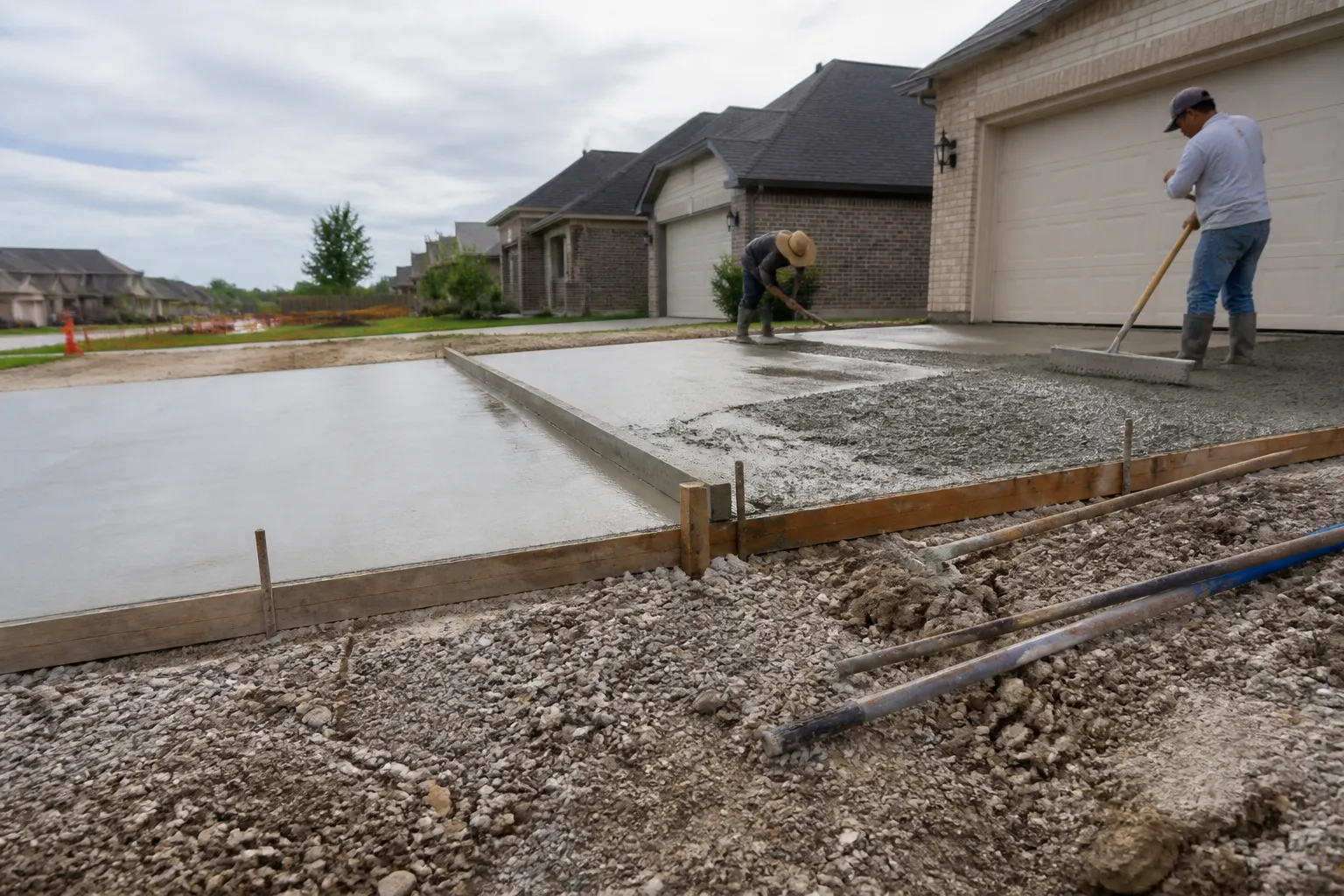
Katy Elite Concrete Contractor pours driveways across Katy, Cinco Ranch, Cross Creek Ranch and the surrounding neighbourhoods, and the question that opens most conversations is what it will cost.
Driveways are priced per square foot, which makes quotes look comparable when they are not. Two bids at the same rate can describe very different driveways once you look at thickness, reinforcement and what happens to the old slab.
Start with the square footage
A single-car driveway is roughly 12 by 24 feet, or about 290 square feet. A standard two-car driveway runs around 20 by 24 feet, near 480 square feet. Add a turnaround, an extended apron or a parking pad and the number climbs quickly.
Measure yours before calling anyone. It makes every quote easier to read.
The four things that actually move the price
1. Thickness
Four inches is the residential minimum and it is adequate for cars. Five or six inches is the right call if you park a truck, an RV, a boat trailer or a work van. The material cost difference between four and six inches is meaningful, and on expansive clay the extra thickness buys real crack resistance.
This is the number one place a cheap bid saves money, and the one place you should not.
2. Reinforcement
Wire mesh is the budget option. Rebar on chairs, tied in a grid, is considerably better on Katy clay because it holds cracks tight when the soil moves. Ask what is being used and how it is supported — rebar lying on the ground before the pour does nothing.
3. Tear-out and disposal
Removing an existing driveway, breaking it up and hauling it away is real labour and real dump fees. A thicker or heavily reinforced old slab costs more to remove. A new pour on bare ground skips this entirely.
4. Site conditions
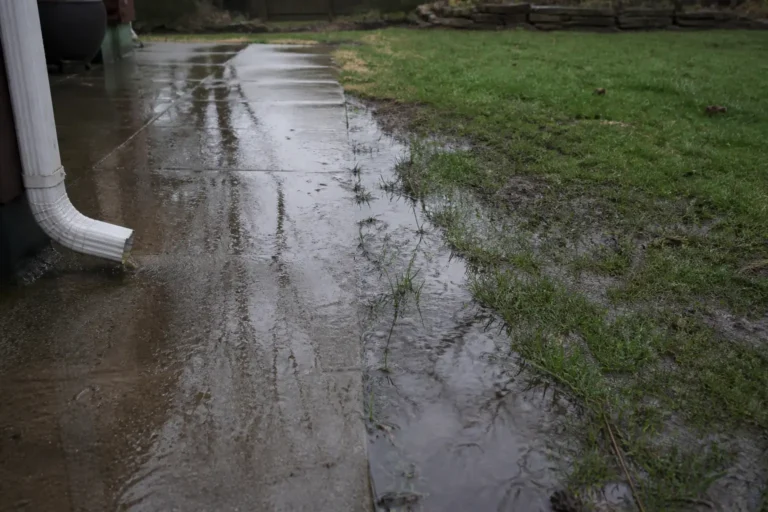
Access for a concrete truck, slope, the amount of grading needed, and whether the subgrade needs additional base material. A driveway that needs regrading for drainage costs more than one that does not, and it is worth every dollar in this soil.
Finishes, from plain to decorative
- Broom finish — the standard. Good traction, lowest cost, looks like what it is.
- Exposed aggregate — the surface is washed to reveal the stone. Excellent grip, hides staining well, moderate upcharge.
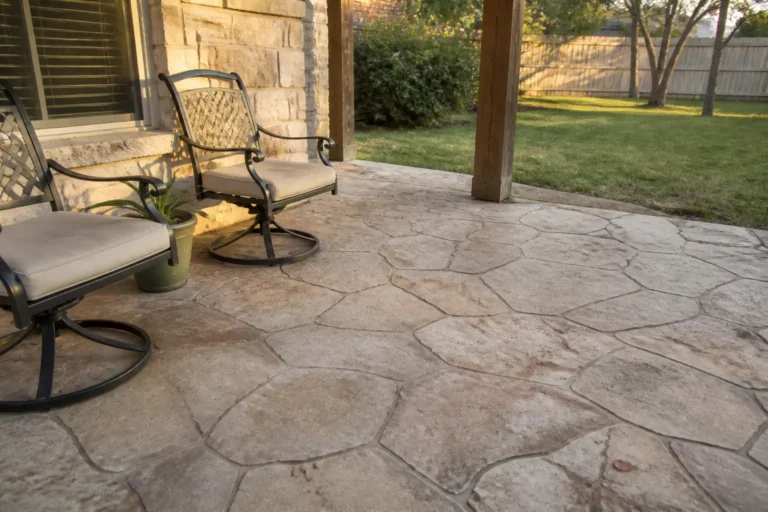
- Stamped — patterned and coloured to imitate stone, brick or slate. The largest upcharge and the biggest visual change. See stamped concrete.
- Coloured or stained — integral colour or a surface stain, often combined with a saw-cut pattern. See decorative concrete.
A useful middle path is a broom-finish main field with a stamped or exposed-aggregate border. It reads as a decorative driveway at a fraction of the full decorative cost.
Things people forget to budget
- Permits, where the neighbourhood or city requires them.
- HOA approval, which is common in Katy’s master-planned communities and can dictate colour and finish.
- The apron where the driveway meets the street, which sometimes falls under different rules.
- Re-establishing grass and irrigation along the edges afterwards.
- Any drainage work — a French drain or regrading — that the new driveway makes possible or necessary.
Getting comparable quotes
Ask every bidder the same five questions and the bids become readable:
- What thickness, and what is the concrete strength in psi?
- Rebar or mesh, what size, what spacing, and how is it supported?
- Is tear-out and disposal included?
- What subgrade preparation is included?
- Where will the control joints go, and at what spacing?
A contractor who answers these clearly is usually the one to hire, regardless of where the number lands. Our driveway quotes itemise each of them.
Timeline
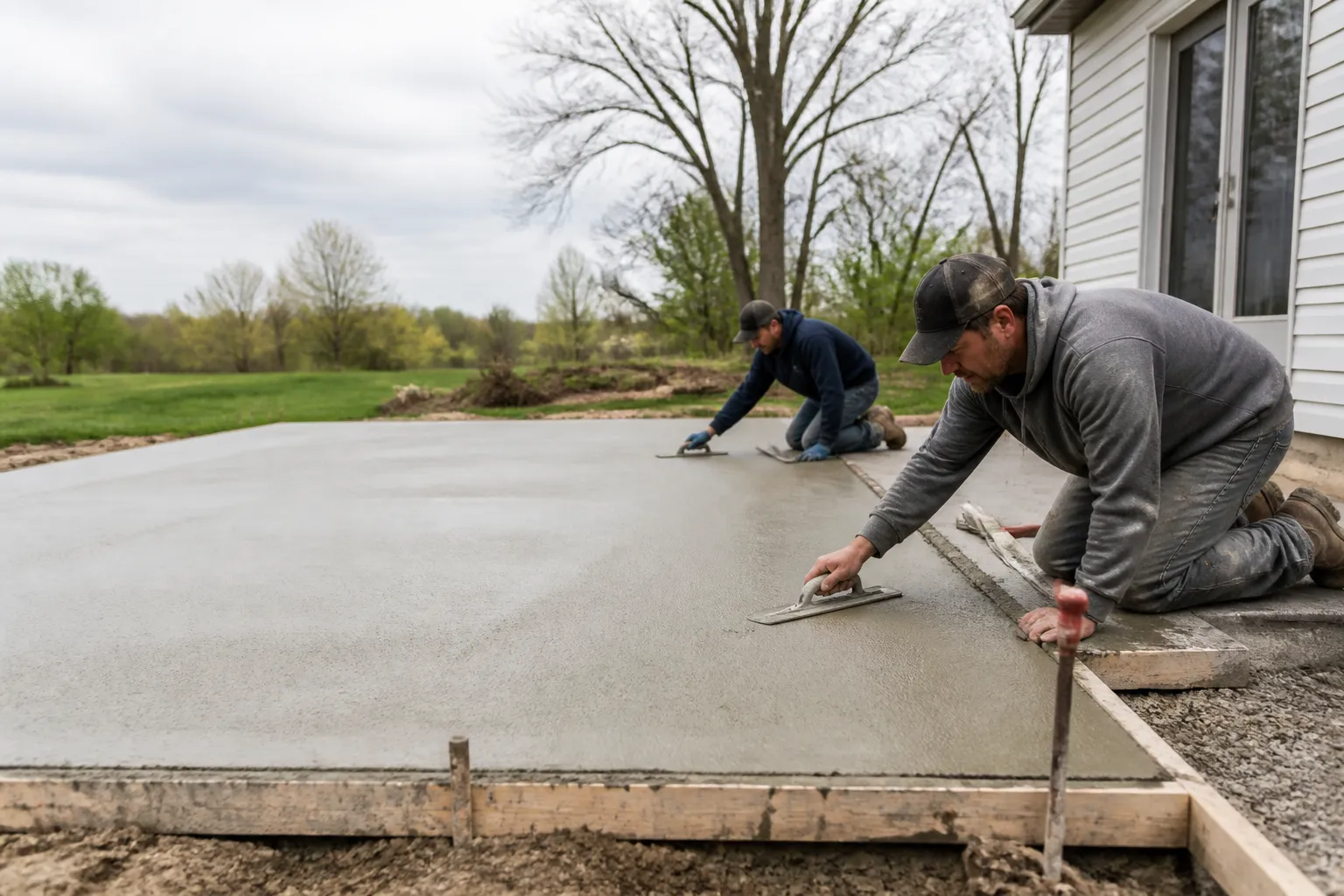
Tear-out and preparation is usually a day. The pour is a day. Then it is a waiting game: you can walk on it after about 24 to 48 hours, drive a car on it after about seven days, and park heavy vehicles after 28 days when the concrete has reached full strength.
Plan for a week without the driveway, and do not let anyone tell you a car can go on it after two days.
Frequently asked questions
Is concrete or asphalt better here?
Concrete, for most Katy homes. Asphalt softens in Gulf Coast summer heat and needs resealing every few years.
Can I pour over my existing driveway?
An overlay works only if the existing slab is structurally sound and the added height does not create problems at the garage or the street. Over a cracked, settling slab it just cracks again.
Will a new driveway crack?
Almost certainly, eventually, in this soil. Proper thickness, reinforcement, joints and drainage determine whether that means a tight hairline at a control joint or a real problem.
How long before I can park on it?
Seven days for a passenger car, 28 days for anything heavy.
Get a number for your driveway
We measure, check the drainage and the subgrade, and itemise the quote so you can compare it to anyone else’s. Call (281) 201-9322.