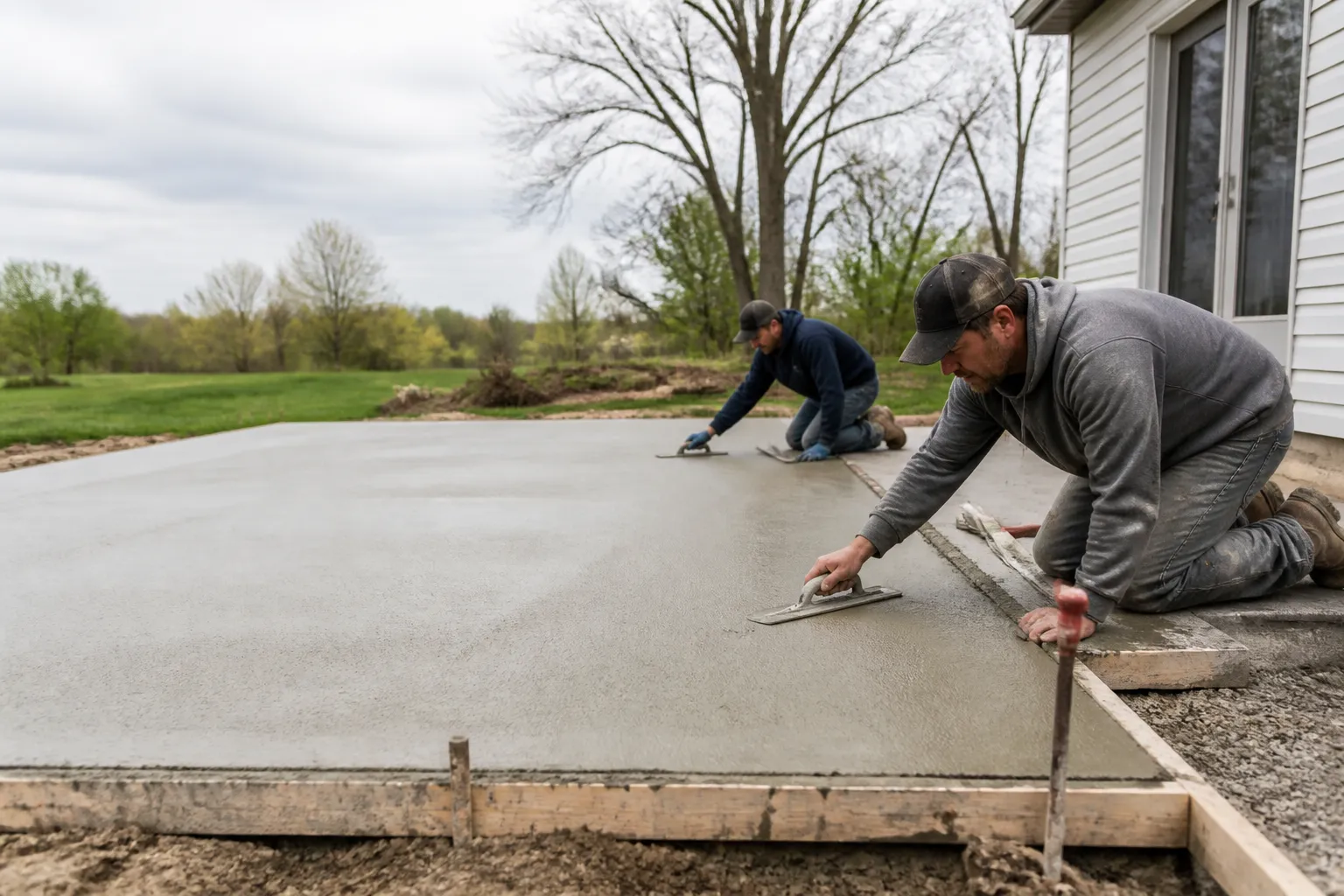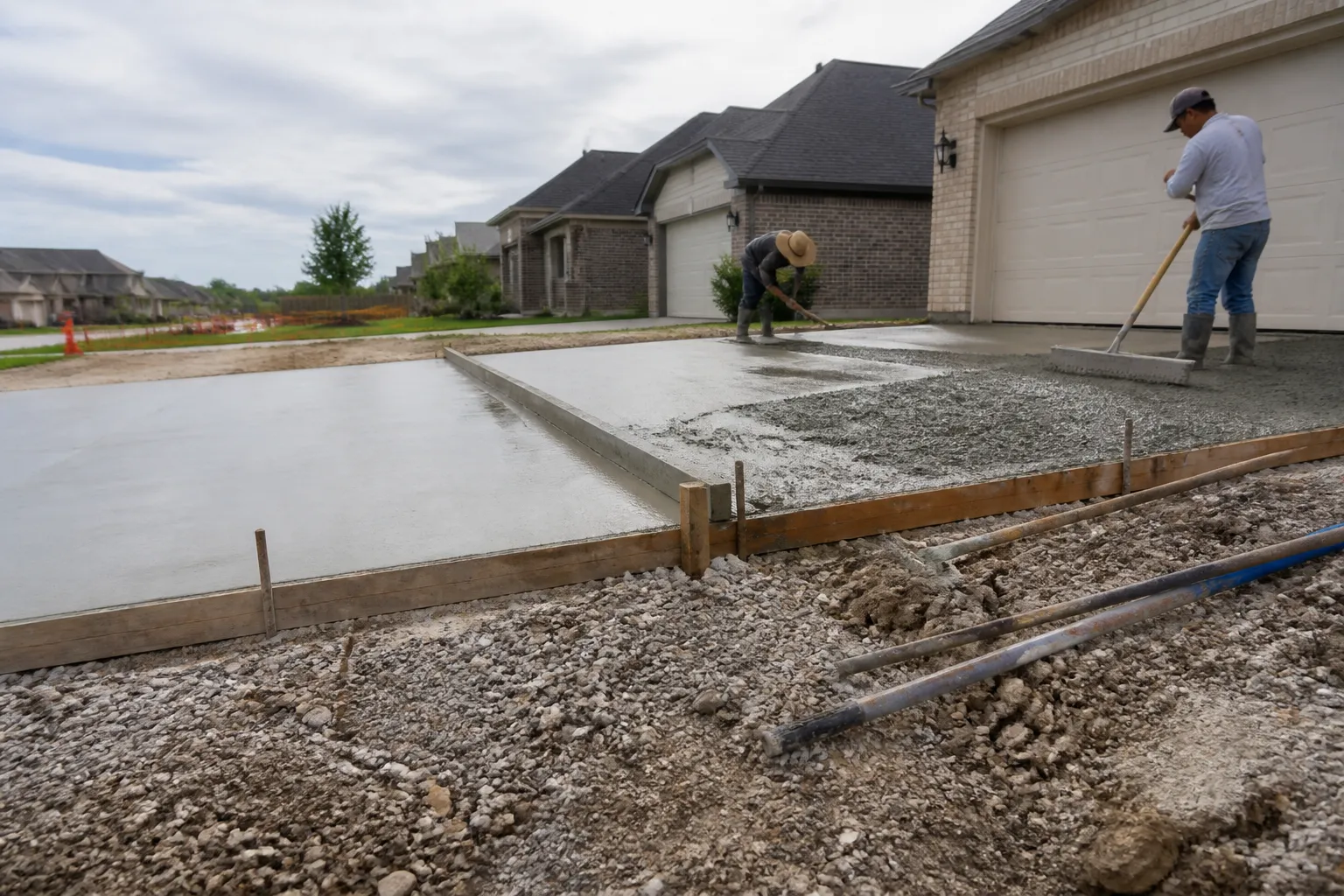
A garage slab carries cars, tools, and years of daily use. It also takes oil, heat, and moisture. Katy Elite Concrete Contractor explains how a good slab is built and how to read the signs when something is wrong.
What makes a strong garage slab
Strength starts under the concrete. A firm, well-compacted base keeps the slab from sinking in spots. The concrete mix and thickness are chosen for the loads. A garage with heavy trucks or a lift needs different planning than one that holds a small car.
Why joints matter
Joints are planned lines that guide cracks. Without them, concrete cracks wherever it likes. Ask where the joints will be and how large each panel will be. See concrete slabs for more on planning.
Reading cracks
Thin hairline cracks are common. Wider cracks, cracks with one side higher than the other, and cracks that grow over time deserve a closer look. Our post on why concrete cracks explains the causes.
Moisture and the floor above it
Garage slabs can hold moisture. If you plan to coat or seal the floor, ask about moisture checks first. A dry-looking slab is not proof of a dry slab.
Repair or replace
Small cracks and chips can often be repaired. A slab that has sunk, tilted, or broken across large areas may need to be lifted or replaced. Review leveling versus replacement before deciding.
Keep it in good shape
Wipe up oil, rinse off road grit, and use mats under cars if you like. Look at the floor each season and keep an eye on the door threshold, where water and wear often show first.
Thickness and loads
A garage slab should be designed for the heaviest loads it will see. Cars are fairly light, while trucks, trailers, and lifts are heavier. Share the details with your contractor so thickness, reinforcement, and base can be planned for your use. A slab that matches its load is less likely to crack or sink.
The edge at the garage door
The area at the door takes the most wear. Water and road grit come in there, and tires cross it every day. A smooth, well-supported threshold and a slight slope away from the door help protect it. If it is chipping, repair it early.
Floor finishes
Some owners seal or coat their garage floors for easier cleaning and a more finished look. Before any finish goes on, the slab should be clean, sound, and checked for moisture. Cracks should be repaired. Ask about the options, and compare them with simply keeping the bare concrete clean.
Plan for storage and workspace
If you plan a workbench, shelving, or a lift, mention it. Heavy equipment may call for a thicker area or special reinforcement. A short conversation at the start can prevent problems later.
Garage slab questions
Is a crack near the door a problem? Often it is just wear and movement, but watch for widening and settling.
Can I add a floor drain? It depends on the layout and local rules. Ask before pouring.
How long before I can park after a new slab? Wait for your crew’s written go-ahead.
Do I need a vapor barrier? It depends on the design. Ask your contractor what is planned for the base and moisture.
Garage slab checklist
- Note the location and width of every crack
- Check the door threshold for chips
- Look for damp spots after rain
- List the heaviest items the floor will hold
Share the list with your contractor so the plan fits your real use.
If your garage floor needs help, our repair team can look at it and outline the steps.