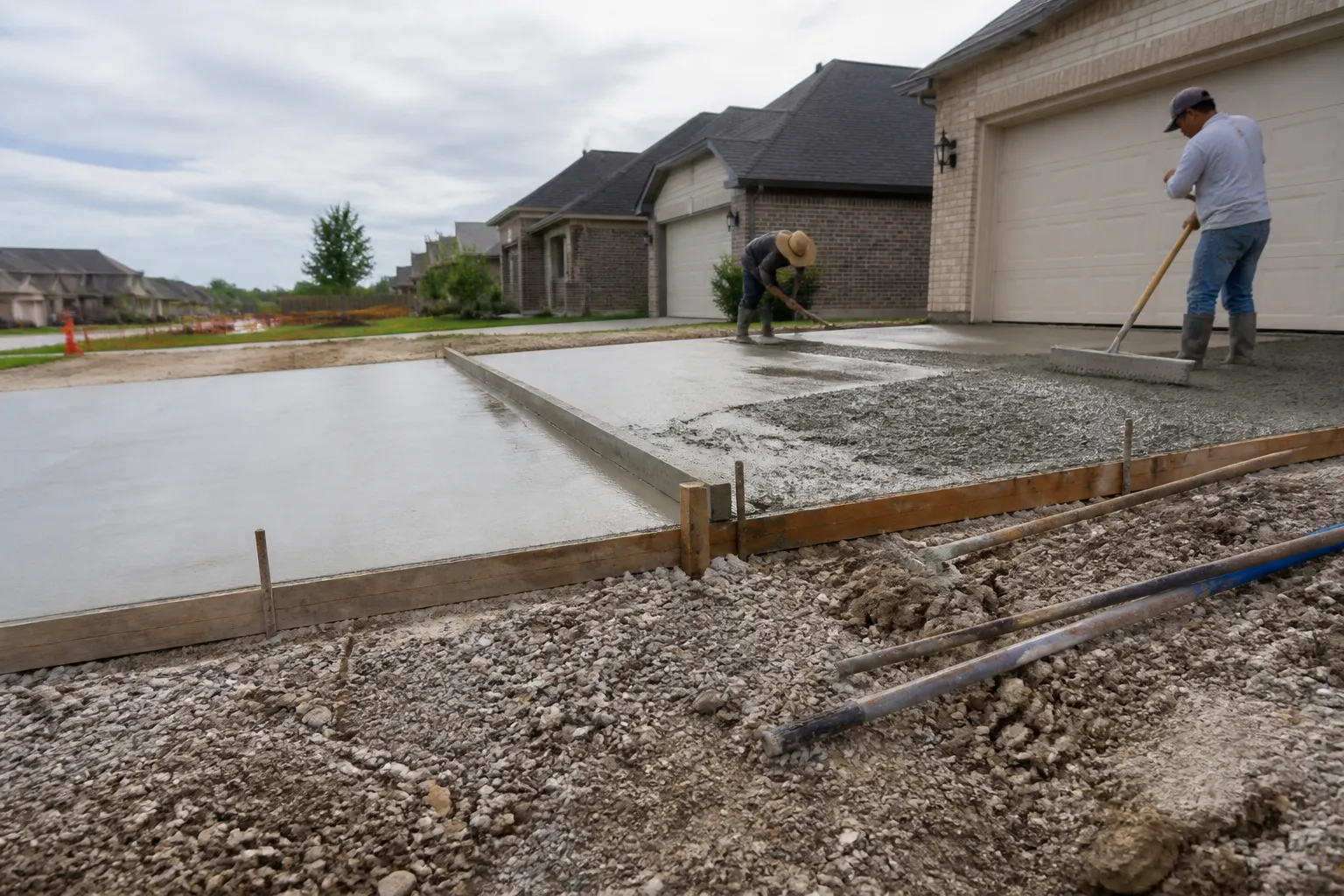
Katy Elite Concrete Contractor works on slabs across Katy and west Houston, and the single most common call we get starts the same way: there is a crack, and the homeowner wants to know how worried to be.
The honest answer is that in this part of Texas, some cracking is close to inevitable. What matters is the type, the width, and whether the two sides have moved relative to each other.
The reason Katy is hard on concrete
The soil here is expansive clay. It absorbs water and swells during wet spells, then dries out and shrinks during summer drought. That vertical movement can be substantial, and it happens unevenly across a slab because one edge may sit under a downspout while another bakes in full sun.
Concrete is strong in compression and weak in tension. When the ground under one part of a slab drops away, the slab bridges the gap until it cannot, and it cracks. No mix design prevents this entirely. Good construction controls where it happens and how much it matters.
The seasonal cycle
Spring rain swells the clay and lifts slabs. August heat pulls moisture out, the clay shrinks, and slabs settle. A crack that looks alarming in September may close noticeably by April. This is worth knowing before you panic at a crack in late summer.
Cracks that are normal
Hairline shrinkage cracks
Concrete loses water as it cures and shrinks slightly. Fine cracks, typically under about 1/8 inch, appearing in the first months are shrinkage cracks. They are cosmetic. Sealing them keeps water out, which is worth doing, but they are not a structural concern.
Cracks along control joints
Those grooves cut into a driveway or patio are there to give the concrete a deliberate weak line. A crack that follows a control joint is the joint doing exactly its job.
Crazing
A fine web of shallow surface lines, a bit like cracked glaze on pottery. It is a surface finishing issue, not a structural one.
Cracks worth attention
Any crack with a vertical lip
Run a foot or a hand across it. If one side sits higher than the other, the slab has settled unevenly — the soil under one section has moved. This is the single clearest sign that something beyond shrinkage is happening, and it is also a trip hazard.
This is the classic case for concrete leveling rather than patching.
Cracks wider than about a quarter inch
Width indicates real movement. A crack you can fit a pencil into is not shrinkage.
Cracks that keep growing
Mark each end with a pencil and write the date beside it. Check in three months and again in six. A static crack is a settled issue. A lengthening one means the soil is still moving.
Diagonal cracks from a corner
A crack running diagonally away from an inside corner, a post footing or a driveway edge usually means a specific support failure at that point rather than general movement.
Cracks on a foundation with matching signs indoors
If a foundation crack comes with doors that stick, gaps opening above interior door frames, or sloping floors, the structure is moving and that is a different conversation from a cracked patio. Our foundation work page covers what is involved.
What actually prevents cracking
You cannot stop clay from moving. You can stop it from moving unevenly, and you can build a slab that tolerates what movement remains.
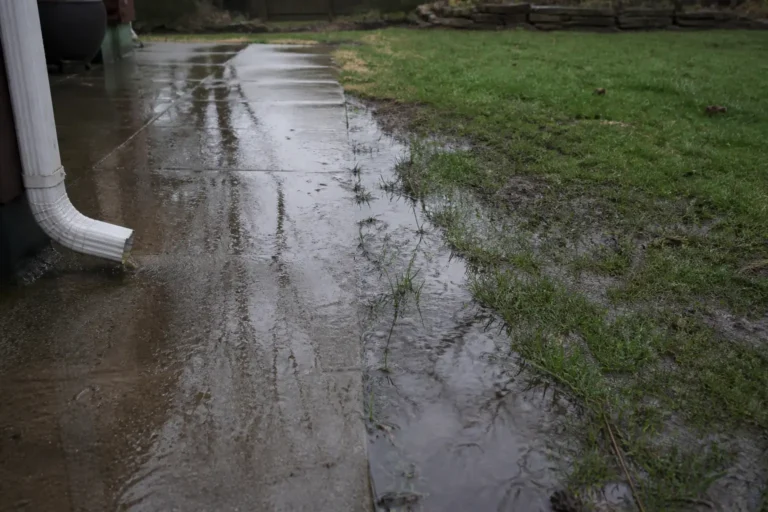
- Drainage away from the slab. Gutters, downspout extensions and grading that carries water at least several feet from the edge. Most uneven settlement we see traces back to water concentrating at one spot.
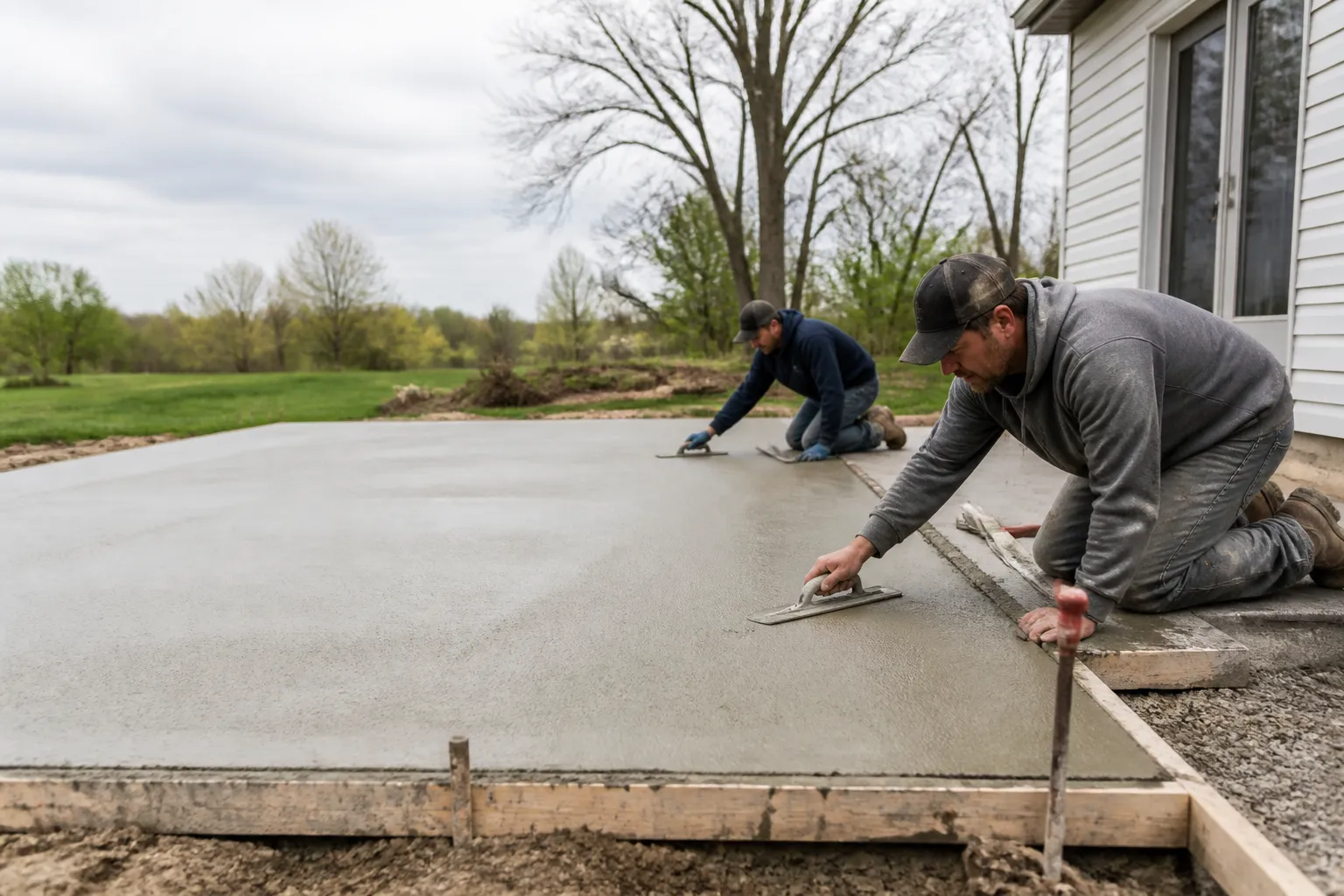
- Proper subgrade preparation. Compacted base, correct thickness, consistent across the whole pour.
- Reinforcement. Rebar or mesh does not prevent cracks; it holds the two sides together so a crack stays tight and flat instead of opening and lipping.
- Control joints at the right spacing. A rule of thumb is joint spacing in feet of no more than two to three times the slab thickness in inches.
- Adequate thickness. Four inches is common for patios and walkways; driveways that see heavy vehicles want more.
- Proper curing. Concrete that dries too fast in Katy heat is weaker and cracks more.
Repair options, briefly
Hairline cracks get a flexible sealant to keep water out. Wider stable cracks can be routed and filled. Slabs that have settled unevenly are lifted back into place rather than replaced, which is far cheaper. Slabs that are broken into multiple pieces, badly spalled or repeatedly failing are candidates for replacement.
Surface damage over a sound slab is often a resurfacing job. Structural damage is a repair or replacement one.
Frequently asked questions
How soon after pouring should I expect cracks?
Fine shrinkage cracks can appear within weeks. Settlement cracks usually show after the first full wet-dry cycle, so within a year or two.
Can a cracked driveway be repaired, or does it need replacing?
Most can be repaired or levelled. Replacement is for slabs broken into many pieces or with widespread surface failure.
Does sealing concrete prevent cracks?
Sealing protects the surface and keeps water out of existing cracks. It does not stop soil movement.
Is a crack in my patio a sign my foundation is failing?
Usually not. A patio is a separate slab on the same soil. Look for indoor symptoms before assuming a connection.
Get someone to look at it
A few minutes on site tells you whether a crack is cosmetic or worth acting on. Call (281) 201-9322 and we will give you a straight answer, including when the answer is to leave it alone.