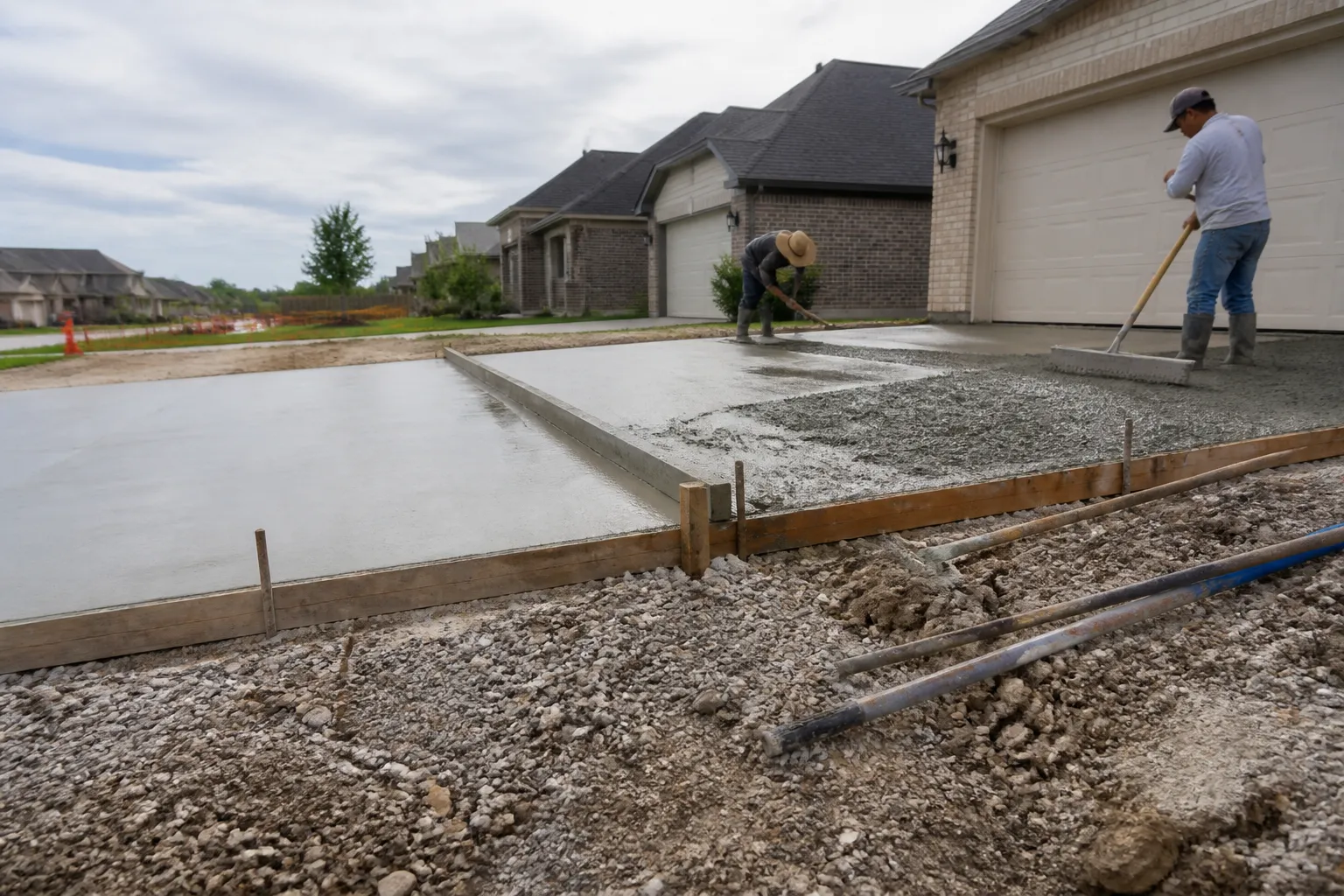
Resurfacing can make a tired slab look new without tearing it out. It is not right for every floor or drive, though. Katy Elite Concrete Contractor explains when it works and when a different fix is better.
What resurfacing is
Resurfacing means applying a thin layer of new material over an existing slab. The layer can be smooth, textured, colored, or stamped. It is a way to refresh the surface, not to repair a structure.
When resurfacing is a good fit
- The slab is solid and level
- The surface is worn, stained, or rough
- Cracks are small and stable
- You want a new color or texture without a full replacement
When it is not
If the slab is sinking, heaving, or cracked through, resurfacing will not hold. The layer will break where the slab moves. In those cases, leveling or replacement is better. See our guide on leveling versus replacement.
How the process works
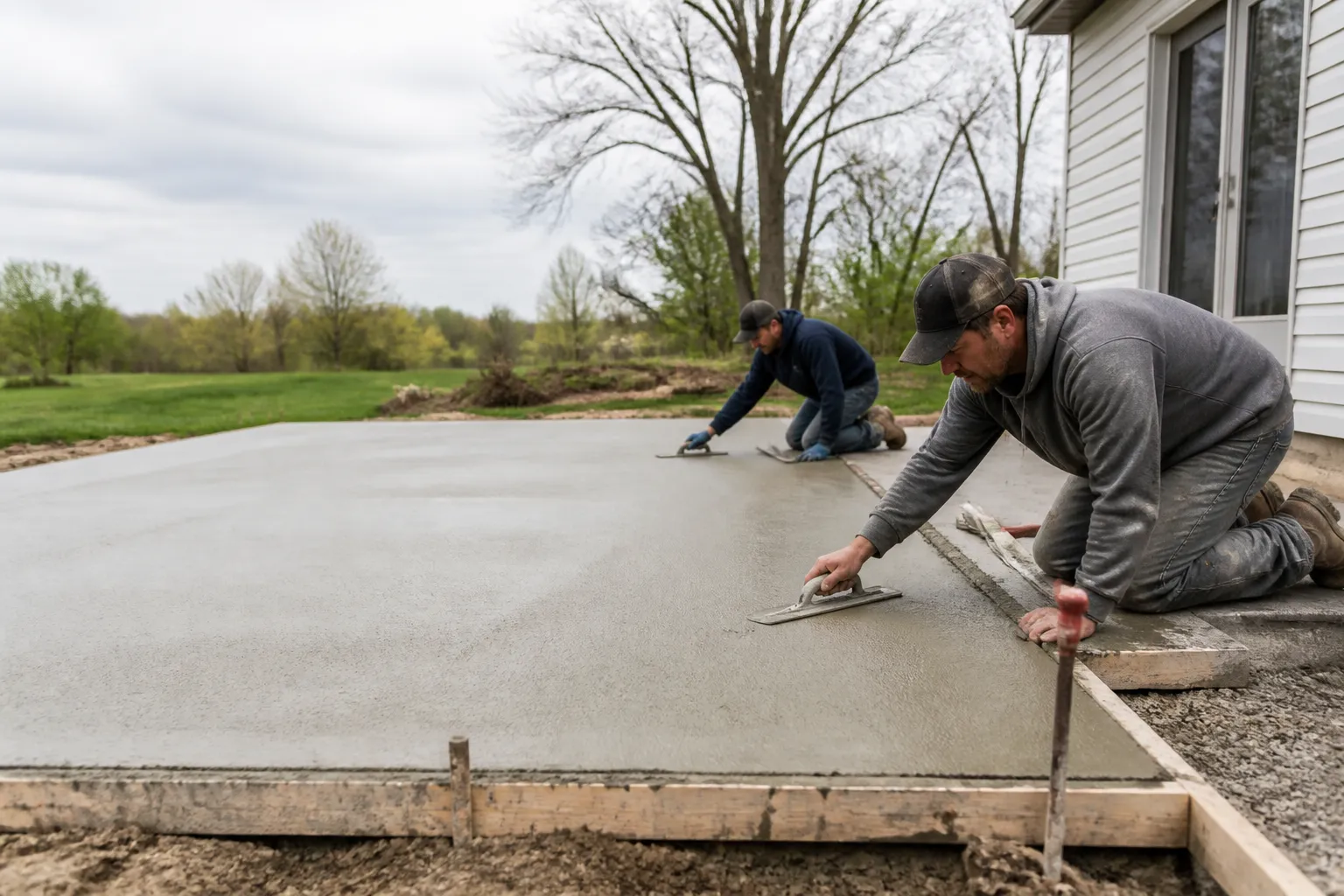
The crew cleans the surface, repairs cracks and chips, and prepares it so the new layer can bond. A bonding coat or primer may go on, then the new material is spread and finished. After curing, a sealer protects it. See concrete resurfacing for what we offer.
Weather and timing
Resurfacing needs the right temperature and dry conditions. In Katy’s heat and humidity, crews often work at cooler parts of the day. Ask how the schedule changes if rain is forecast.
Care afterward
Keep traffic off until the crew says it is ready, clean with mild products, and reseal on schedule. A resurfaced slab is only as good as its care.
Check the base before you commit
A resurfacing layer is thin, so the slab beneath must be sound. Tap the surface with a hammer or the handle of a tool. A hollow sound can mean the old surface is loose. A good contractor will test for this and cut out any weak spots. Skipping this step is a common reason resurfacing fails.
Decorative choices
Resurfacing can add color, texture, or a stamped pattern. A light broom finish gives grip. A stamped pattern gives style. Colors can be solid or blended. Ask for samples in the light where the slab sits, and think about how the color will look next to your house and landscaping.
Thickness and edges
Because the layer is thin, edges need care. Doors, garage thresholds, and steps may need a feathered edge or a small cut so the new surface does not catch. Ask how the crew will handle those transitions.
Cost and value
Resurfacing usually takes less time and removal work than replacing a slab, but it only makes sense if the slab is sound. Ask for the scope in writing, and compare it with a replacement plan so you can see what you are saving and what you are giving up.
Resurfacing questions
How long does it last? It depends on the slab, the product, the traffic, and care. Ask for the maker’s guidance.
Can it be stamped? Yes, stamped overlays are common. Ask to see samples.
Does it need sealing? Usually yes, to protect the surface and color.
Can I use the surface right away? No. Ask for a written timeline for foot traffic and vehicles.
Is my slab ready for resurfacing?
- No sunken or tilted sections
- No wide or growing cracks
- No hollow sounds when tapped
- Good drainage around the slab
If you can check each box, resurfacing may be a good option. If not, ask about leveling or replacement first.
Ready to see if your slab qualifies? Send photos of the surface and any cracks, and we will tell you whether resurfacing fits.