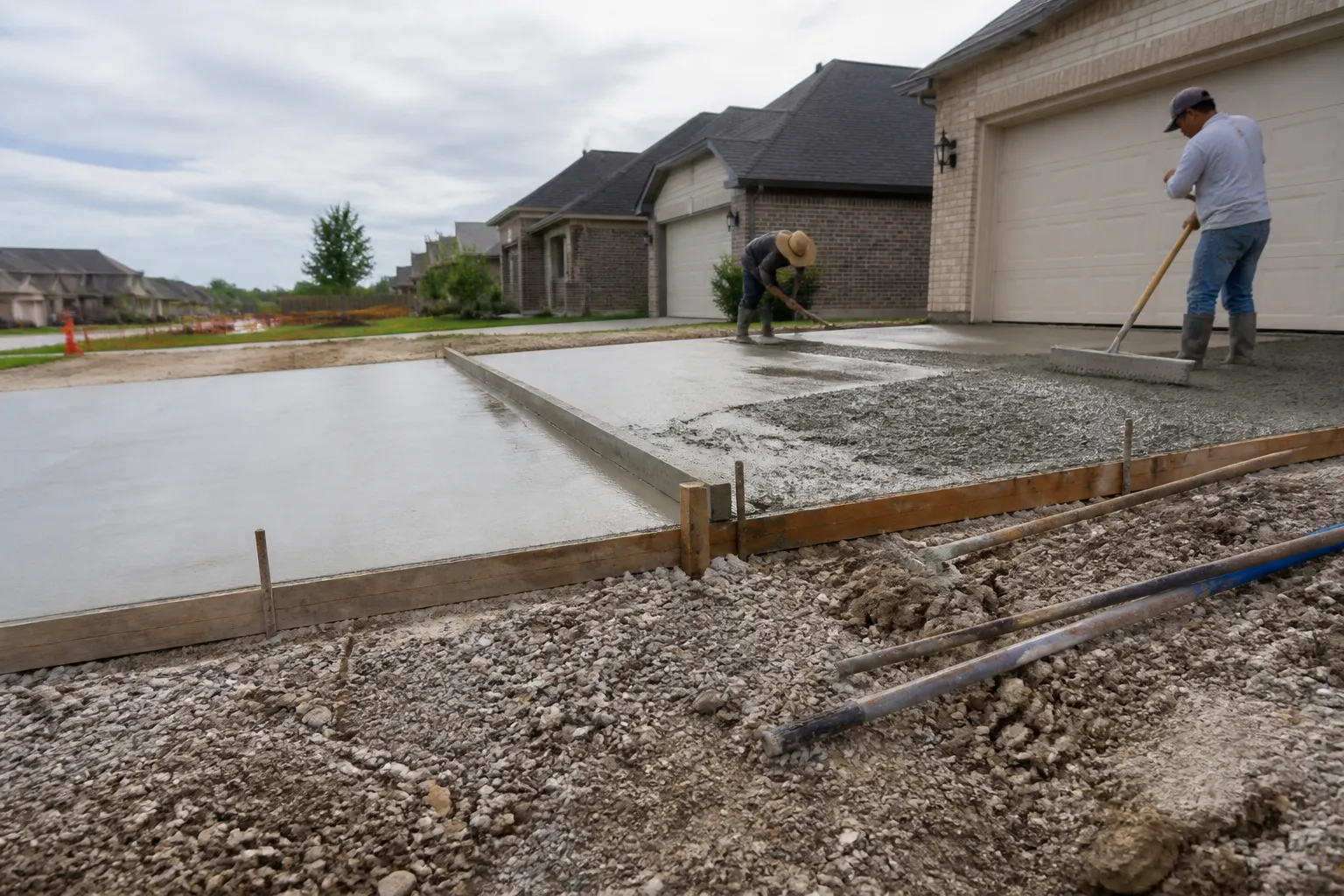
Katy Elite Concrete Contractor pours year round in Katy, and the difference between a slab placed on a mild April morning and one placed on a 98-degree July afternoon is larger than most homeowners realise.
Concrete does not dry. It cures, through a chemical reaction that needs water. Heat speeds that reaction up and simultaneously steals the water it needs. Those two effects together are what make hot weather pours harder.
What heat actually does
It shortens working time
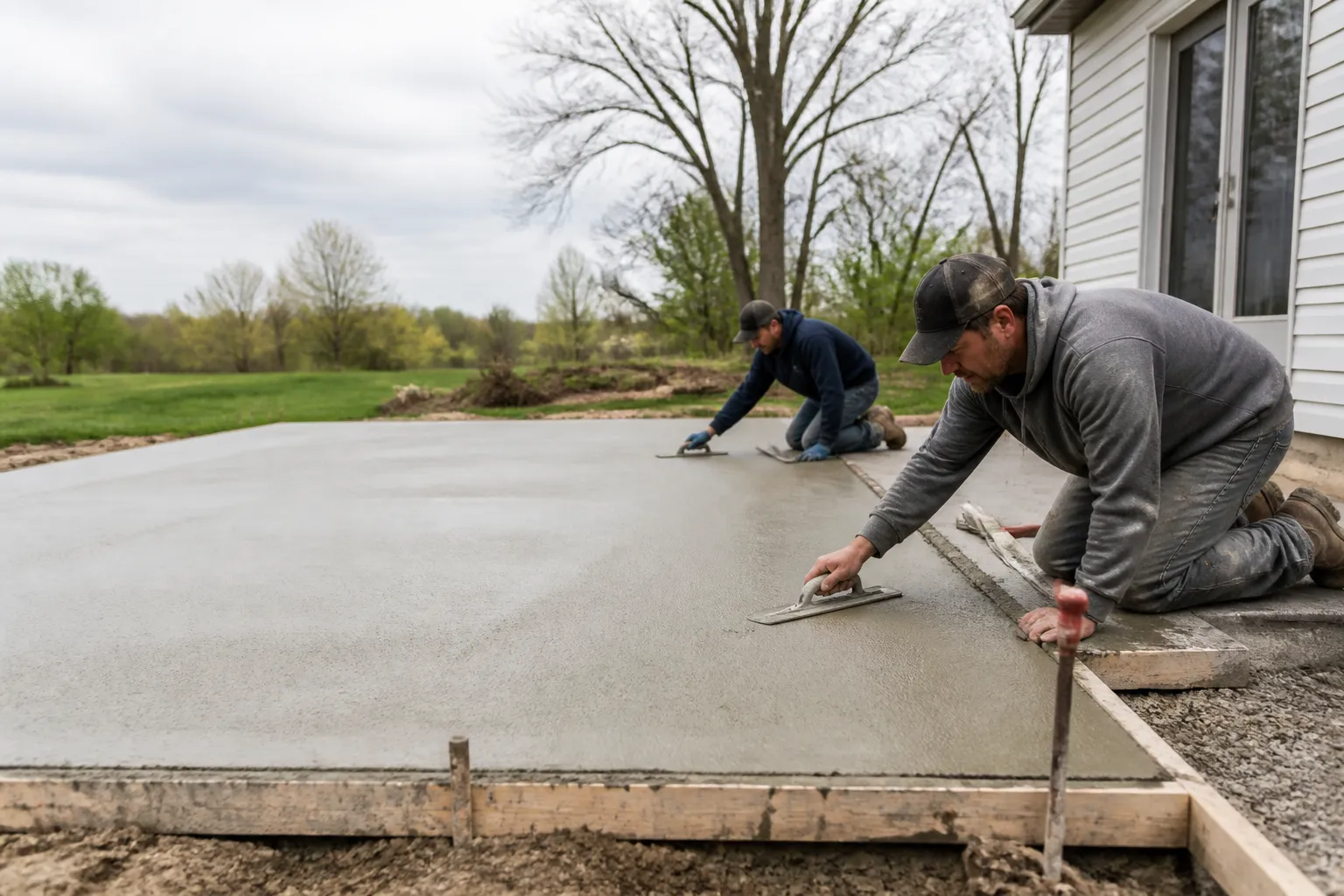
On a mild day a crew might have an hour or more to place, screed and float before the concrete stiffens. At 95 degrees with wind, that can drop to twenty minutes. Rushed finishing produces a weaker, less durable surface.
It causes plastic shrinkage cracking
When surface water evaporates faster than the concrete can bleed more to the top, the surface shrinks while the body below does not. The result is a set of short, roughly parallel cracks that appear within hours of the pour — before the concrete has any real strength.
Wind matters as much as temperature here. A hot windy day is worse than a hotter still one.
It lowers ultimate strength
This is the counterintuitive one. Concrete that cures fast in heat reaches early strength quickly but ends up weaker at 28 days than the same mix cured slowly. A slab that sets fast is not a slab that ends up stronger.
It increases thermal cracking risk
A slab placed hot and then hit by an evening thunderstorm or a cool front contracts unevenly. Katy summers supply exactly that pattern.
What a good crew does about it
- Pours early. Starting at dawn is the simplest and most effective measure. On the worst days, an evening pour.
- Wets the subgrade and forms beforehand so dry ground does not pull water out of the mix from below.
- Uses chilled water or ice in the mix to bring the concrete temperature down at the plant.
- Adds a retarder to extend working time, and avoids accelerators, which are for cold weather.
- Brings more hands. The crew size that works in November is not enough in July, because the window is shorter.
- Applies an evaporation retarder — a fine film sprayed on the fresh surface between finishing passes.
- Cures properly. Curing compound, wet burlap, plastic sheeting or continuous water for the first days. This is the step most often skipped and it matters more than any other.
- Erects shade or windbreaks on exposed sites.
Curing is not optional here
Curing means keeping moisture in the concrete while the reaction proceeds. A slab left to bake uncovered in Katy sun can lose a significant share of its potential strength and will have a softer, dustier surface that wears and spalls sooner.
Ask any contractor how they will cure your slab and for how long. A clear answer — curing compound applied the same day, or wet cure maintained for seven days — is a good sign. A vague one is not.
What this means for scheduling
You do not need to avoid summer. Plenty of good concrete goes down in Katy in July. But it does mean:
- Expect an early start, sometimes before sunrise. Plan access accordingly.
- Do not push a crew to start late in the day because it suits your schedule.
- Accept a reschedule if the forecast turns extreme. A contractor willing to postpone is protecting your slab.
- If the project can wait, October through April is easier, and crews are often more available.
The flip side is the rain. Katy’s wet season brings its own delays, and a pour interrupted by a downpour before the surface has set is worse than a hot one. Spring and autumn shoulder seasons split the difference.
Where it matters most
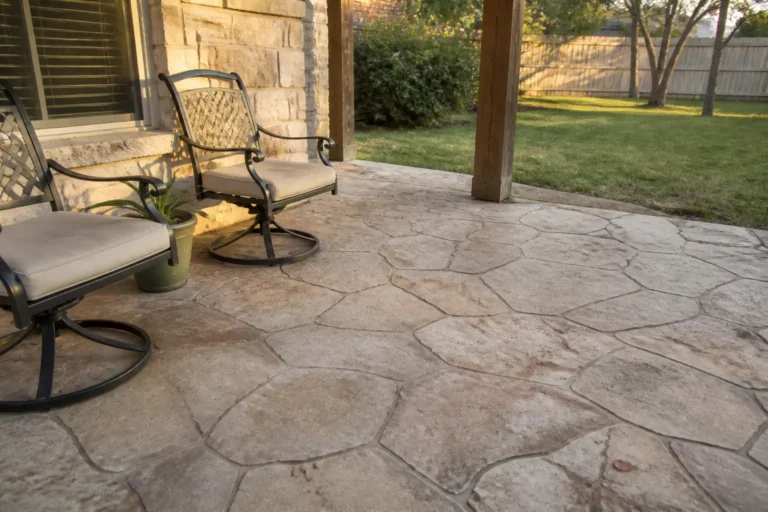
Heat effects scale with surface area. A large slab or a wide driveway is far more exposed than a narrow sidewalk. Decorative work is the most sensitive of all, because stamping has to happen in a narrow window when the concrete is at exactly the right stiffness — and heat shrinks that window dramatically.
If you want stamped work, a cooler-season pour genuinely produces a better result.
Signs a pour went badly in the heat
- Short parallel cracks visible within the first day or two.
- A dusty surface that leaves residue on your hand weeks later.
- Flaking or scaling within the first year.
- A patchy, blotchy colour on decorative work.
Some of this can be addressed with resurfacing over a structurally sound slab.
Frequently asked questions
Is there a temperature at which concrete should not be poured?
There is no single cutoff. What matters is the concrete temperature at placement and the evaporation rate, which combines heat, humidity and wind. Good crews check all of it.
Does wetting the slab afterwards help?
Yes, that is wet curing, and it works — but it has to be continuous. Wetting it once and letting it dry does more harm than good.
Will my slab be weaker if it was poured in summer?
Only if hot weather measures were skipped. Properly managed, a summer pour performs the same.
How long before I can use it?
Foot traffic after 24 to 48 hours, vehicles after seven days, full strength at 28 days — heat does not change this schedule.
Ask about the curing plan
We will tell you when we plan to start, how we will cure it, and when we would rather wait for weather. Call (281) 201-9322.