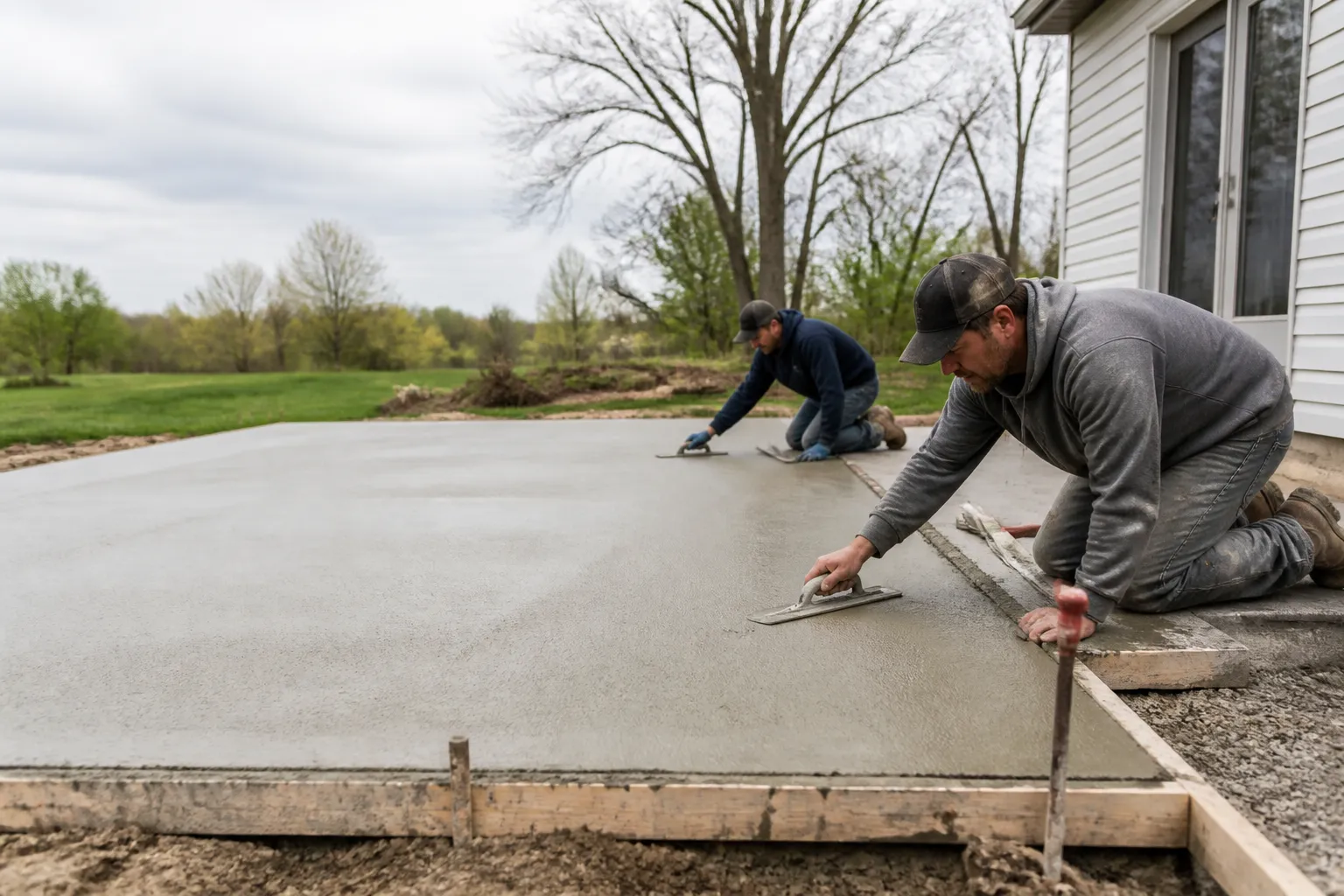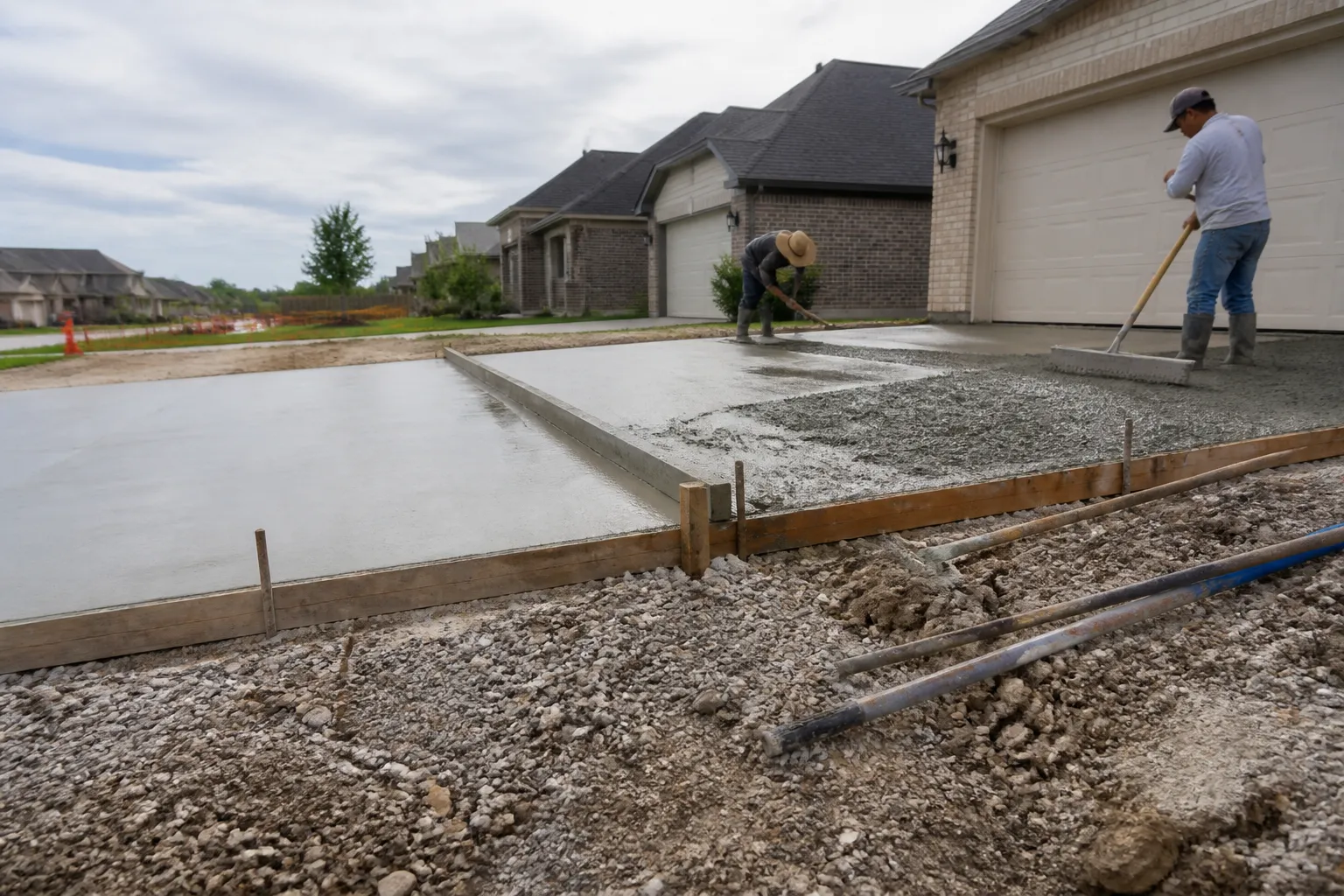
The days after a pour matter as much as the pour itself. Concrete gains strength over time, and early care helps it reach its full potential. Katy Elite Concrete Contractor shares a simple month-long plan for homeowners with new driveways, patios, and slabs.
Days one to three: keep it undisturbed
Stay off the surface until your crew says it is safe. Keep pets, kids, and bikes away. Do not write in the finish or drag anything across it. Water, rain, and debris can mark fresh concrete, so ask what protection is in place if the forecast looks wet.
Days three to seven: let it cure
Curing means keeping moisture in the concrete so it can gain strength. Your contractor may apply a curing compound, cover the slab, or ask you to mist it lightly. Follow their directions closely. Hot Texas days can dry the surface too fast, which can lead to surface cracks. For more on heat, see our heat guide.
Weeks one to four: build up to full use
Light foot traffic comes first. Cars and heavy items come later, once your crew says the concrete has enough strength. Avoid parking heavy trucks, trailers, or equipment until you get a clear go-ahead. Keep sharp objects and spinning tires from tearing at the edges.
What is normal and what is not
Fine hairline cracks can appear as concrete dries and are often cosmetic. Wide cracks, crumbling edges, or sections that sink are not normal. Take photos with a coin beside the crack and send them to your contractor. Learn more in why concrete cracks in Katy.
Keep away from harsh products
Avoid deicing chemicals, strong acids, and fertilizers on young concrete. Rinse off spills quickly. Wait for the right time before sealing, and ask your contractor for that timing.
Watch the surroundings
Keep sprinklers from soaking the same patch every day. Check that downspouts and drains send water away from the slab. A little attention to water can protect a new pour for years.
Handling rain, heat, and sprinklers
Katy sees heavy rain at some times of year and hot sun at others. Fresh concrete needs protection from both. Rain can mar the surface, and fast drying in the sun can weaken it. Ask your crew what covers or curing products they use, and keep sprinklers off the slab until the concrete has set.
Edges and corners
Edges and corners are the most fragile parts of a new slab. Avoid dragging heavy items near them. Keep mowers, bikes, and car tires from clipping the edge. Backfill and soil along the edges can also help protect them once the crew says it is time.
A simple record for your files
Write down the date of the pour, the mix and finish if you know them, and the day the crew said it was ready for use. Take a few photos of the finished surface. If a question comes up later, these notes make it easier to talk with your contractor.
When to call us
If you see new cracks that widen, crumbling at the edges, or water standing in one spot, take a photo and send it. Early attention almost always means a smaller, simpler fix.
New concrete questions
Can I park on it after a week? Often not yet. Wait for your crew’s go-ahead, since strength builds over time.
Should I water the slab? Only if your contractor says so. The right curing method depends on the mix and weather.
Why is the color uneven? Color can vary while concrete cures and dries. It often evens out. If it does not, ask your contractor.
When can I seal it? Wait for the time given by your crew, since sealing too early can trap moisture.
A 30-day checklist
- Week one: keep traffic off and follow curing instructions
- Week two: allow light foot traffic only after your crew says so
- Week three: watch for cracks and photograph them
- Week four: ask about the right time to seal
Mark these dates on a calendar so nothing slips by.
Ask us about a written care sheet for your project, whether it is a driveway, a slab, or a walk.