Katy Elite Concrete Contractor often hears the same question after a new pour or a few hot summers: should we seal it? Sealing is one of the simplest ways to protect a driveway or patio, but only when it is done at the right time and in the right way. This guide explains what a sealer does, which kinds exist, and how to avoid the common mistakes.
What a sealer actually does
Concrete looks solid, but it is full of tiny pores. Water, oil, and dirt move into those pores. A sealer slows that movement. It does not make concrete waterproof or stain proof. It makes cleanup easier, helps resist surface wear, and can protect colored or stamped finishes from fading. Think of it as a raincoat, not a force field.
Two main types of sealer
Penetrating sealers soak into the concrete and protect from within. They leave the surface looking natural and usually keep its grip. Film-forming sealers sit on top and can add color depth and sheen. They look richer on stamped concrete and decorative work, but they can turn slick when wet. Ask your contractor which type fits your project, and ask how the surface will feel underfoot after sealing.
When to seal new concrete
New concrete needs time to cure before it is sealed. Sealing too early can trap moisture and cause cloudy or peeling patches. Your crew will tell you how long to wait for your mix and weather. In the hot, humid Gulf Coast climate, curing and drying can move faster or slower than expected, so follow the written guidance for your pour rather than a calendar rule.
Prep makes or breaks the job
A sealer only bonds to a clean surface. Sweep first, then wash off dirt, algae, and oil. Let the slab dry completely. Fill small cracks and repair chips before sealing, since sealer will not hide them. Check the forecast too. Most products need a dry window with moderate temperatures, and a surprise shower can leave marks.
Common mistakes to avoid
- Applying too thick a coat, which can look milky or peel
- Sealing a damp slab
- Skipping a traction additive on a pool deck or ramp
- Using a driveway sealer on a surface that needs a different product
How often to reseal
Water beading on the surface is a good sign. When water starts soaking in and darkening the concrete, it may be time for a fresh coat. Many homeowners check once a year in spring. High-traffic drives and sunny patios usually need attention sooner than shaded walkways.
Choosing a product for your surface
Driveways, patios, and pool decks need different things. A driveway needs a product that handles hot tires and oil. A patio may care more about color and a natural look. A pool deck needs grip above all. Tell your contractor how the surface is used, then ask to see a small test patch before the full job. Seeing a sample dry in your own light prevents surprises.
How the work is done
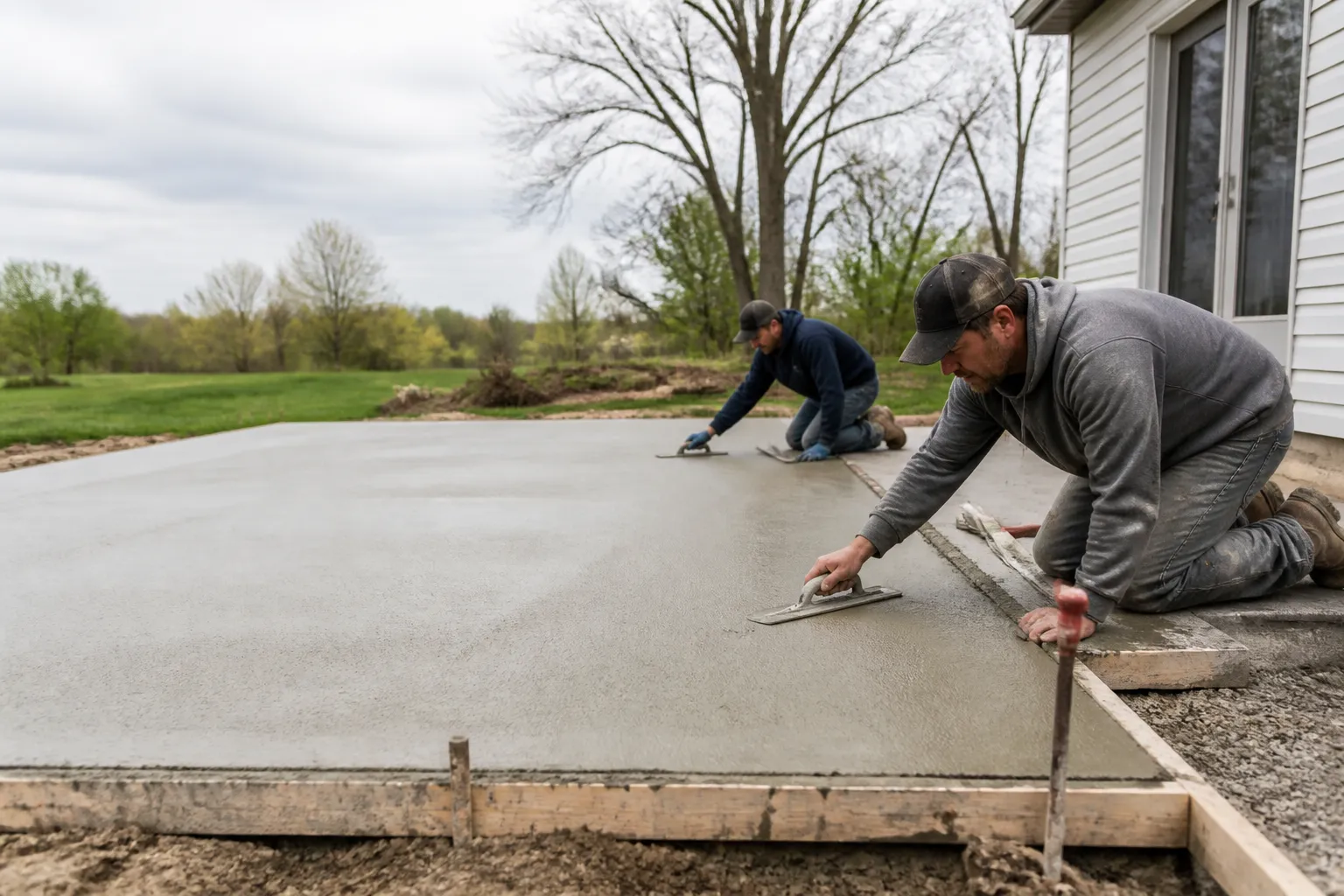
The crew cleans the slab, protects plants and walls, and applies the sealer with a sprayer, a roller, or a squeegee. Thin, even coats work better than one heavy coat. Between coats, the sealer needs time to set. Keep foot traffic, pets, and sprinklers away until the crew says the surface is ready.
What to expect after sealing
Penetrating sealers often look like plain concrete, with a slightly darker shade when wet. Film-forming sealers may add sheen. Water should bead on the surface. If it does not, mention it when you call so the crew can check the product and the timing.
Sealing questions homeowners ask
Will sealing make my driveway slippery? Some film-forming sealers can be slick when wet. Ask for a non-slip additive, especially on slopes and near pools.
Can I seal over old sealer? Often not without prep. Old, peeling sealer should be removed or tested first, since new product may not bond.
Does sealing stop cracks? No. A sealer protects the surface but does not stop a slab from moving. Cracks need repair before sealing.
Can I do it myself? Small areas can be a fair project if you follow the label closely. Larger areas and decorative work are often better left to a crew with the right tools.
If you are planning new work, we can build sealing into the plan for driveways, patios, and walks. For more on how heat and rain affect new pours, read pouring concrete in Texas heat.